


Newsroom

Why ICP-MS is essential for semiconductor process control

The critical role of precision temperature control

Why ICP-MS is essential for semiconductor process control

1. Introduction

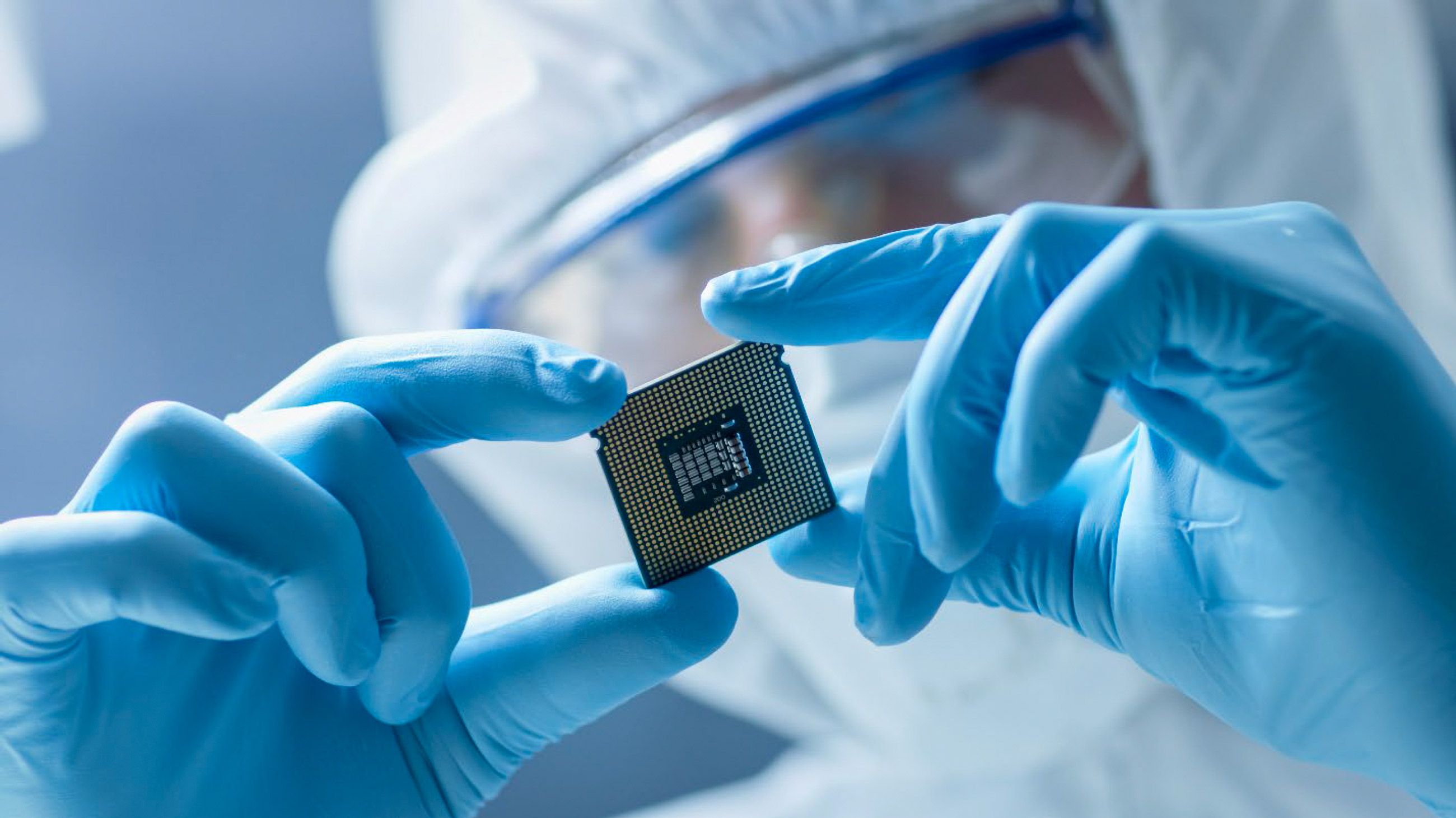
Modern semiconductor manufacturing operates at a scale where the vocabulary of contamination has shifted from parts-per-million to parts-per-trillion (ppt) and, increasingly, parts-per-quadrillion (ppq). As the industry has progressed through the 5 nm, 3 nm, and 2 nm logic nodes — and pushes toward gate-all-around (GAA) and backside power-delivery architectures beyond them — the physical dimensions of transistor features have shrunk to the point where a single mislocated metal atom can alter device behavior. At these nodes, gate dielectrics are only a few atomic layers thick, junction depths are measured in nanometers, and the channel is engineered with sub-monolayer precision. There is simply no margin for the elemental impurities that earlier generations of devices tolerated.

Metallic contamination is particularly damaging because transition metals such as iron, copper, nickel, chromium, and the alkali metals sodium and potassium are electrically active in silicon. They introduce deep-level traps and mid-gap states that increase junction leakage, degrade minority-carrier lifetime, shift threshold voltages, and create gate-oxide integrity (GOI) failures. Mobile ions such as Na⁺ migrate under bias and cause threshold-voltage instability over a device's operating life. Copper, which diffuses rapidly in silicon and silicon dioxide, can short-circuit interconnect dielectrics. Because each of these mechanisms scales unfavorably as feature sizes shrink, the contamination budget tightens with every node. The economic consequence is direct: contamination reduces wafer yield, and yield is the dominant lever on fab profitability. A 300 mm wafer at an advanced node can carry several hundred high-value die; a contamination event that depresses yield by even a few percent represents a substantial loss multiplied across thousands of wafers per week. Crucially, contamination at the ppt level is invisible to most conventional analytical methods, yet it is precisely this regime that determines defect density at advanced nodes. This is why ultra-trace elemental analysis has become a foundational pillar of process control — and why Inductively Coupled Plasma Mass Spectrometry (ICP-MS) sits at the center of the modern fab's analytical infrastructure.

2. Why is ICP-MS critical for semiconductor manufacturing?

ICP-MS combines an argon plasma operating near 6,000–10,000 K — which atomizes and ionizes virtually every element in the periodic table — with a mass spectrometer capable of counting individual ions. The result is a technique that can quantify metallic impurities across a dynamic range spanning more than nine orders of magnitude, from major constituents down to single-digit ppt and below. In the semiconductor environment, this capability is applied across the entire material and process chain.

Analysis of Ultrapure Chemicals

Process chemicals — sulfuric acid, hydrogen peroxide, hydrofluoric acid, ammonium hydroxide, hydrochloric acid, slurries, photoresist developers, and solvents — are delivered to SEMI Grade purity specifications, with the most stringent grades (e.g., SEMI Grade 5) specifying individual metals at or below 10 ppt. ICP-MS is the reference technique for certifying these grades and for incoming-inspection verification, because no other method routinely resolves the full suite of regulated metals at these concentrations. A single out-of-spec drum of HF reaching the wet bench can contaminate thousands of wafers before the excursion is detected.

Ultrapure Water (UPW) Monitoring

UPW is the most heavily consumed material in a fab, used in vast quantities for rinsing and dilution. Target metal concentrations in UPW are typically below 1 ppt for critical species. ICP-MS monitors the UPW polishing loop and point-of-use distribution to confirm that ion-exchange resins, membranes, and piping are not shedding contaminants. Because UPW touches the wafer at nearly every process step, even transient ppt-level excursions propagate directly to the wafer surface.

Wafer Surface Contamination Analysis

Surface metal contamination is quantified by vapor-phase decomposition (VPD) followed by ICP-MS. In VPD-ICP-MS, HF vapor decomposes the native oxide, a scanning droplet collects the dissolved metals across the wafer surface, and the pre-concentrated droplet is analyzed. This workflow achieves surface detection limits on the order of 10⁸–10⁹ atoms/cm², sensitive enough to map the metal contamination that correlates directly with GOI yield and device leakage.

Incoming Raw Material Quality Control

Sputtering targets, CMP slurries, silicon precursors, gases, and packaging materials are all screened by ICP-MS before release to production. Catching a contaminated lot at the loading dock is orders of magnitude cheaper than discovering it through depressed yield weeks later.

Cleanroom Contamination Monitoring

Airborne molecular contamination (AMC) and surface deposits in the cleanroom environment are captured on collection media and analyzed by ICP-MS to verify that filtration, materials of construction, and personnel protocols are not introducing metals into the manufacturing environment.

3. Importance of ICP-MS Performance

The value of ICP-MS in this setting rests on a specific combination of performance attributes that, taken together, no competing technique matches:

  • Detection limits down to ppt and ppq. ICP-MS routinely reaches single-digit ppt detection limits, and with collision/reaction-cell technology and cold-plasma or high-resolution operation, it pushes into the ppq regime for select elements. This is the concentration window where advanced-node yield is actually determined.
  • Excellent sensitivity. The plasma ionizes most elements with high efficiency, and ion-counting detectors register individual ions, giving the technique the raw sensitivity needed to see impurities that are otherwise undetectable.
  • Multi-element analysis. In a single acquisition, ICP-MS quantifies dozens of elements simultaneously, from lithium to uranium, which is essential when a contamination signature may involve any of many possible species.
  • High reproducibility. Tight run-to-run and day-to-day reproducibility is what makes ICP-MS suitable for statistical process control, where the ability to distinguish a real excursion from analytical noise depends on a stable, repeatable measurement.

Every one of these attributes is sensitive to the physical stability of the instrument and physical stability begins with temperature.

Surface metal contamination is quantified by vapor-phase decomposition (VPD) followed by ICP-MS. In VPD-ICP-MS, HF vapor decomposes the native oxide, a scanning droplet collects the dissolved metals across the wafer surface, and the pre-concentrated droplet is analyzed. This workflow achieves surface detection limits on the order of 10⁸–10⁹ atoms/cm², sensitive enough to map the metal contamination that correlates directly with GOI yield and device leakage.

4. The Critical Role of Temperature Control in ICP-MS

ICP-MS is, at its core, a thermally governed measurement chain. Each stage — plasma generation, ion extraction, mass analysis, and detection — is sensitive to temperature, and thermal drift anywhere along the chain propagates into the analytical result. The following sections describe the engineering mechanisms by which temperature stability underpins performance.

Plasma Stability

The argon plasma is sustained by inductive coupling of radio-frequency power into the load coil surrounding the torch. The plasma's position, temperature, and ionization efficiency depend on the precise impedance match between the RF generator and the plasma load. That match is temperature-dependent: as the load coil and matching network heat up, their electrical characteristics drift, shifting the coupling and causing the plasma to wander or fluctuate. The chiller that cools the load coil and torch box holds these components at a fixed temperature, so the plasma sits in a stable, reproducible operating point — the foundation of consistent ionization.

RF Generator Performance

Modern solid-state RF generators deliver 1,000–1,600 W into the plasma, and a significant fraction of that power is dissipated as heat in the power transistors and the matching network. The output power, frequency stability, and impedance of these components shift with temperature. Without active cooling held to a tight setpoint, the delivered RF power drifts, the plasma's energy budget changes, and ionization efficiency — and therefore sensitivity — varies over the course of a run. Stable coolant temperature keeps generator output constant.

Detector Stability

The electron multiplier and its associated counting electronics have gained characteristics that vary with temperature. A drifting detector temperature changes the counts registered for a fixed ion flux, directly corrupting quantitative accuracy and degrading the consistency of calibration. Maintaining the detector and surrounding electronics in a thermally stable enclosure preserves the count-to-concentration relationship that calibration depends on.

Electronics Cooling

Beyond the RF generator, the quadrupole or sector electronics, lens power supplies, and control boards all have temperature-dependent behavior. DC offsets, reference voltages, and timing can drift with ambient and internal temperature, subtly shifting mass calibration and ion-optic tuning. Coordinated thermal management of these subsystems suppresses that drift.

5. Why High-Performance Chillers Are Essential
Why High-Performance Chillers Are Essential

ICP-MS is, at its core, a thermally governed measurement chain. Each stage — plasma generation, ion extraction, mass analysis, and detection — is sensitive to temperature, and thermal drift anywhere along the chain propagates into the analytical result. The following sections describe the engineering mechanisms by which temperature stability underpins performance.

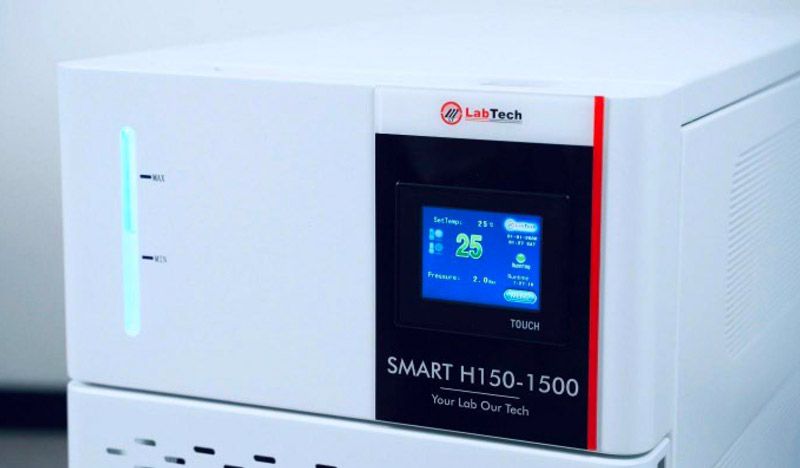
Facility cooling water and ambient air conditioning cannot meet the thermal requirements described above. House chilled water fluctuates with building load, may carry corrosive ions and particulates, and offers neither stability nor the cleanliness an ICP-MS demands. A dedicated recirculating laboratory chiller is therefore not an accessory but an integral subsystem of the instrument. Its essential characteristics are:

  • Precise temperature stability (±0.1 °C or better). The cooling loop must hold setpoint to ±0.1 °C or better. Because plasma coupling, RF output, and detector gain all respond to fractions of a degree, anything loose allows measurable drift into the analytical result.
  • Stable coolant flow rate. Heat removal depends on both temperature and flow. A stable, well-regulated coolant flow rate ensures the load coil, interface, and pumps receive constant cooling; flow surges or sag change component temperatures even when the setpoint is nominally held.
  • Continuous 24/7 operation. Semiconductor analytical labs run around the clock. The chiller must sustain continuous operation 24/7 for years without performance degradation, since an unplanned chiller stoppage idles the ICP-MS and the QC pipeline that depends on it.
  • High cooling capacity. The chiller must have sufficient cooling capacity to absorb the full thermal load of the RF generator, interface, and vacuum pumps simultaneously, with headroom for warm ambient conditions, so it never operates at its limit.
  • Low vibration. Compressor and pump vibration can be coupled mechanically into the spray chamber, nebulizer, and ion optics, modulating signal. A low-vibration design — through compressor isolation and balanced pumps — protects measurement stability.
  • Low maintenance requirements. Features such as accessible filters, sealed circuits, and robust components minimize maintenance and keep the chiller from becoming the limiting factor in instrument uptime.
  • Long-term instrument protection. By holding the RF generator, cones, and pumps within their design temperature windows, the chiller reduces thermal stress and extends the service life of the most expensive ICP-MS components — delivering long-term instrument protection.

6. Benefits of Proper Chiller Temperature Control

An optimally specified and maintained chiller translates thermal stability into concrete analytical and economic outcomes:
BenefitEngineering and operational impact
Higher analytical accuracy

Stable plasma coupling and detector gain keep the calibration valid, so reported concentrations reflect the true sample composition rather than thermal artifacts.

Better precision

Eliminating thermal noise tightens replicate agreement, improving the signal-to-noise ratio and the lab's ability to resolve genuine ppt-level differences.

Reduced instrument downtime
Components held within their thermal windows are far less likely to trigger protective shutdowns or fail unexpectedly, keeping the QC pipeline running.
Longer component lifetime
Lower thermal stress on the RF generator, turbo pumps, and interface cones extends their service life and defers costly replacements.
Lower maintenance costs
Reduced cone erosion, salt deposition, and pump wear cut both consumable spend and labor hours.
Improved manufacturing yield
Trustworthy ultra-trace data enables tighter contamination control, which directly supports higher wafer yield at advanced nodes.
Increased laboratory productivity
Less drift means longer sequences between recalibrations, fewer reruns, and more samples analyzed per shift.
A practical illustration: consider a VPD-ICP-MS station running an overnight sequence of 40 wafer-surface samples for GOI correlation. With facility-grade cooling, RF and detector drift might force a recalibration every 10–12 samples and produce a measurable signal decline across the batch, undermining wafer-to-wafer comparability. With a ±0.1 °C recirculating chiller, the same sequence runs start-to-finish on a single calibration with internal-standard recoveries holding flat, more wafers characterized per shift, with data clean enough to drive a yield-improvement decision.

7. Conclusion

As semiconductor manufacturing advances to 2 nm and beyond, the tolerance for metallic contamination has collapsed to the ppt and ppq regime, and ICP-MS has become indispensable for the ultra-trace elemental analysis that protects wafer yield. Yet the sensitivity of ICP-MS is only half the story. That sensitivity is realized in practice only when the instrument operates in a thermally stable state, because plasma coupling, RF power, detector gain, vacuum integrity, interface behavior, and sample introduction are all governed by temperature. Thermal instability does not merely add noise, it introduces systematic drift that can masquerade as a real process signal or mask one, with direct consequences for yield decisions.

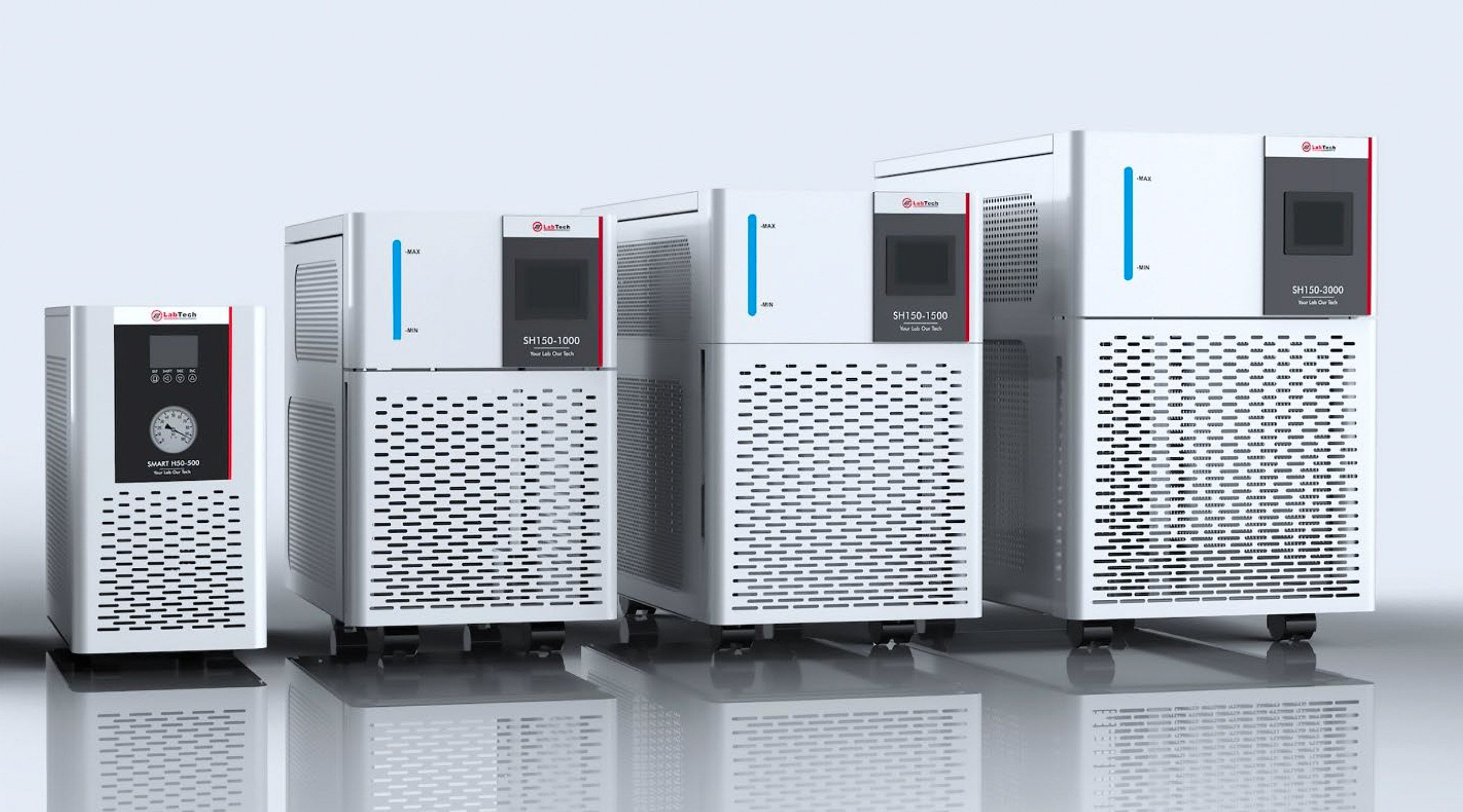
For this reason, a high-performance recirculating chiller delivering ±0.1 °C stability, regulated flow, ample capacity, corrosion-resistant construction, and reliable 24/7 operation is not a peripheral convenience but a core enabler of analytical performance. Investing in the right chiller maximizes accuracy and precision, reduces downtime and maintenance cost, extends the life of the ICP-MS's most expensive subsystems, and ultimately underpins the stringent quality requirements of advanced semiconductor fabrication. In the modern fab, exceptional thermal stability and exceptional analytical sensitivity are inseparable and the chiller is where that stability begins. LabTech's recirculating chillers are built for exactly this role, holding setpoint within ±0.1 °C with reliable, low-vibration 24/7 operation. Discover LabTech’s Water Chiller range.

The critical role of precision temperature control

Subscribe to our Newsletter to be always updated

LabTech
LabTech S.r.l.
Via Fatebenefratelli, 1/5
24010 - Sorisole (BG) - Italy
P.IVA: IT03242600165

Contact Us

This email address is being protected from spambots. You need JavaScript enabled to view it.
Phone +39 035 576614
Don't have an account yet? Register Now!

Sign in to your account